March 1, 2026, 7:16 pm


Start Network shares new insights on coastal communities

TAM Report ||
In a gathering of humanitarian leaders, donors, and local responders, Start Fund Bangladesh recently launched two timely studies exploring how Bangladesh’s coastal communities live, earn, and prepare for disasters. The event created an important platform for dialogue around strengthening anticipatory action and disaster risk financing in one of the world’s most climate-vulnerable countries.
Central to the event were the launches of two key publications: “Early Warning Systems for Cyclone and Flood Risks in Bangladesh: A Country Overview” and “Household Economy Analysis (HEA): A Baseline for Cyclone Contingency Planning in the Coastal Region of Bangladesh.” Held under the theme “Challenges to Opportunities: Understanding Economic Patterns and Early Warning Systems to Strengthen Disaster Risk Financing,” the event went beyond presenting data—it ignited discussion on how to translate findings into collaborative, community-driven action.
Humanitarian leaders, government officials, and technical experts engaged in rich discussions on how the studies can inform timelier and locally led responses, reflecting on how this work aligns with Bangladesh’s national roadmap for the Early Warnings for All (EW4All) initiative.
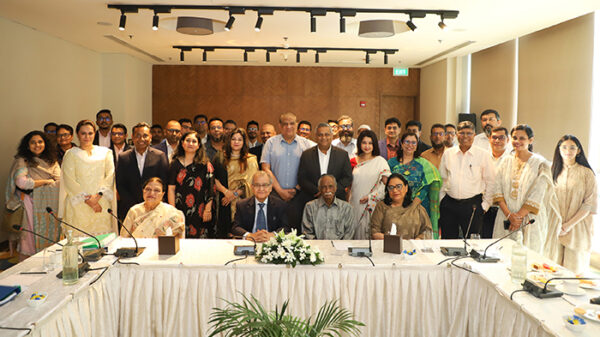
The event brought together government officials, researchers, UN representatives, members of the Start Network and its secretariat to discuss the challenges of the current Early Warning System and explore opportunities for its improvement. Discussions emphasized the need for an overarching policy framework to enable relevant government departments to act in line with national early action protocols and the Standing Orders on Disaster (SOD). Recommendations included the development of forecasting methods that priorities the likely consequences of disasters—especially in key sectors such as agriculture and health—and the establishment of clear risk indicators and thresholds to guide timely and targeted responses.
As part of these efforts to enhance disaster preparedness, Start Bangladesh has initiated the development of a “One District – One List” system—a comprehensive database of at-risk households. This initiative, undertaken in collaboration with Start Bangladesh members and other key humanitarian actors, aims to facilitate more effective targeting and enable rapid, coordinated responses.
A Panel discussion also highlighted the importance of enhancing detection, observation, monitoring, and forecasting capacities. This includes fostering collaboration with international meteorological organizations such as the India Meteorological Department (IMD) and the World Meteorological Organization (WMO) to improve forecast accuracy and extend lead times. Additionally, upgrading Digital Elevation and Inundation Models was recommended to strengthen flood prediction capabilities and inform planning for infrastructure resilience.
The occasion was honored by the presence of Rezwanur Rahman, Director General of the Department of Disaster Management, as Chief Guest. In his address, he noted:
“This research is not only vital for advancing early action but also inclusive of the realities faced by diverse economic groups.”
“Disasters often displace large numbers of people, and by strengthening early warning systems and understanding economic impacts, we can help reduce the burden on the most vulnerable communities—especially those living in poverty,” he emphasized.
Special Guests included Ahmadul Haque, Additional Secretary, Director (Admin), Cyclone Preparedness Program; Md. Momenul Islam, Director, Bangladesh Meteorological Department; and Netai Chandra Dey Sarker, Director MIM, Department of Disaster Management.
Representatives from the global Start Network also participated, including Anna Farina, Head of Crisis Anticipation and Risk Financing (CARF), and the Technical Partnerships Advisor – CARF. Reflecting on the broader implications of the studies, the Head of CARF remarked:
“Effective coordination among stakeholders is essential to ensure timely, inclusive, and impactful responses to emerging threats.”
Start Bangladesh is a network of humanitarian NGOs and relevant civil society actors supported by the global Start Network. The journey of Start Bangladesh began with the establishment of Start Fund Bangladesh (SFB) in 2017—a Start Network program modelled after the successful Start Fund, designed to disburse funding within 72 hours of a crisis alert.
Currently, the Hub has expanded beyond Start Fund Bangladesh and includes more programs in its portfolio. The Network is made up of 40 local, national, and international member NGOs, each bringing diverse experiences and backgrounds to their work in Bangladesh. It is a nationally owned, membership-led mechanism governed by transparent, neutral, and collective decision-making, acting ahead of or in response to humanitarian crises in the country.





Address: 33 Kawran Bazar, Tejgaon, Dhaka
Phone: +8809696382895
Email: info@theasiamirror.com theasiamirror@gmail.com